The US Needs a National Stadium
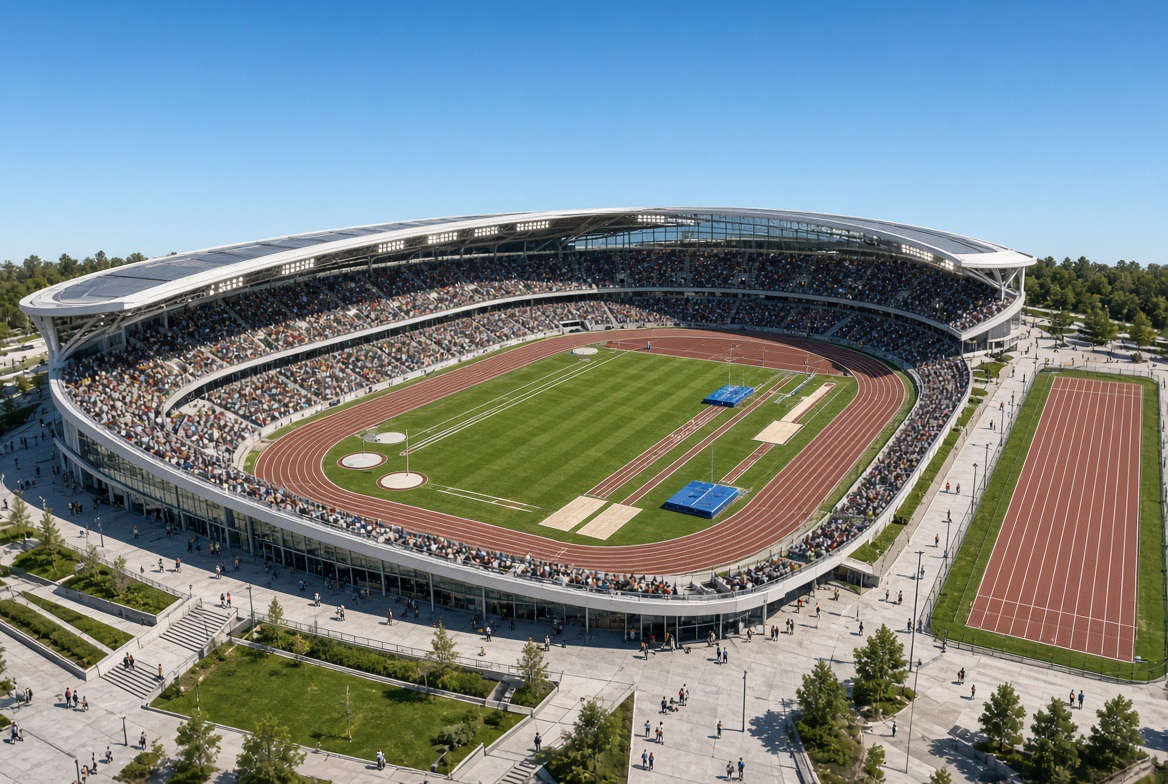 Nairobi just made history. If the United States wants to lead this sport instead of merely dominating its medal count, USATF needs to stop borrowing stadiums and start building one.
In September, World Athletics awarded the 2029 World Championships to Nairobi, Kenya — beating out bids from London, Munich, and Rome and sending the sport’s flagship event to Africa for the first time in its history. President Sebastian Coe called it a “compelling and emotional bid,” and he’s right to. Kenya is second only to the United States on the all-time World Championships medal table, and this is a well-earned, overdue moment for the continent that produces so much of the sport’s talent.
It’s also a moment worth sitting with here at home. The championships have now been staged, or will soon be staged, in Asia (Beijing, 2027), Africa (Nairobi, 2029), and Europe (Munich, 2031). The world keeps building new stages for this sport. The question for the United States – the sport’s all-time medal leader, and the world’s largest economy – is why we keep showing up to the party without ever hosting it properly ourselves.
“We are the world’s premier track and field power, in the world’s premier economic power. We shouldn’t have to borrow a college
stadium to prove it.”
A Cabin in the Woods
It’s time for USATF to think bigger than the next quadrennial budget cycle and pursue a permanent national track and field campus – a facility built to host U.S. nationals every year, and built to win bids for the events that matter internationally: World Championships, World U20 and U18 Championships, the World Athletics U23 Championships, Pan American Games athletics, another Diamond League stop, and made-for-American-audiences events like a revived Goodwill Games or a regional “Team Challenge” festival – East vs. West vs. North vs. South – that could build the kind of made-for-TV rivalry college football and the Ryder Cup already know how to sell.
None of that requires reinventing the wheel. It requires the kind of funding model American sports already understand instinctively: corporate naming rights and anchor sponsorship, the same mechanism that built SoFi Stadium, Allegiant Stadium, and half the venues in professional sports.
The Funding Model
American track and field is, at its core, a footwear sport – and the footwear industry has more capital sitting on the sidelines of this conversation than almost any other stakeholder. USATF should approach the sport’s biggest apparel and footwear brands – Nike, Adidas, New Balance, ASICS, Mizuno, Hoka, On, Puma, and Skechers among them – and solicit anchor commitments in the neighborhood of $75–$100 million each in exchange for:
● Dedicated advertising and activation space built into the facility itself;
● A footwear-branded name for the stadium or the broader campus, the way naming rights already work across American sports;
● Priority access for brand-sponsored meets, trials, and youth development programming held on-site between marquee events;
● A visible, permanent stake in giving the sport an identity in the United States that isn’t reset from scratch every four years.
A consortium of even three or four of those brands would fund a facility capable of competing for the biggest bids the sport has to offer – without a dollar of the public money that so often turns stadium proposals into political fights before a shovel ever hits the ground.
Where It Belongs
Location matters as much as funding. Los Angeles and New York have the name recognition, but both already strain under their own congestion, cost of living, and competition for venue dates – and LA already has the 2028 Olympics to carry. A dedicated track and field home doesn’t need the biggest media market; it needs a growing metro with room to build, a strong airport, a climate that cooperates on the calendar, and a base of local government and civic appetite to make it happen.
The Bay Area, San Diego, and North Carolina’s Research Triangle all fit that profile – growing tech and research economies, strong university track programs already feeding the sport, and the kind of civic ambition that has built world-class venues from scratch before.
Acting Like the Power We Are
The United States wins more medals in this sport than any nation on earth and treats the infrastructure around it like an afterthought. We are the world’s foremost political and economic power, and in this one corner of global sport, we behave like we can’t afford a permanent home for it. We can. The tools are sitting in plain sight: a sport-defining roster of American and global footwear brands with the capital and the motive to invest, a wide field of growing American cities that would welcome the project, and a calendar of international events – from the World U20s to the Pan American Games to a Diamond League stop to a revived Goodwill Games – that a purpose-built campus could compete to host on a rotating basis for decades.
Nairobi didn’t get to 2029 by accident. Kenya built a track and field identity through sustained investment and repeated hosting experience, from the 2007 World Cross Country Championships to the 2017 World U18s to the 2021 World U20s, until the bid for the biggest prize of all became the obvious next step. The United States has the medals, the money, and the media market. What it doesn’t have is the building. It’s time USATF gave this sport a real address in America.