Pro Or College – The Elite Athletes Choice
 As we take a look at the growing number of elite track and field athletes that are now being developed in high schools, we need to also look at the choice that these elite talents face when they graduate. The traditional choices for elite high schoolers has changed dramatically in just the past few years. For athletes like Allyson Felix in the early 2000’s to Noah Lyles and Michael Norman in the late 2010’s, the choice was pretty simple. Sign a professional contract with a shoe company for what they were willing to pay, or run under the constraints of the NCAA. Each with its positives and negatives.
Go Pro: You got paid, but you immediately inherited the liabilities of running a small business. You had to find and fund a coach, secure and pay for a training facility, hire a manager, and cover your own medical staff out of pocket. YOU had to finance the entire operation.
Go NCAA (Pre-2020): You gained a built-in, elite training system, but you were legally barred from earning a dime because of strict amateurism rules.
Prior to 2020, an elite athlete had a simple, frustrating choice: make money or join a system.
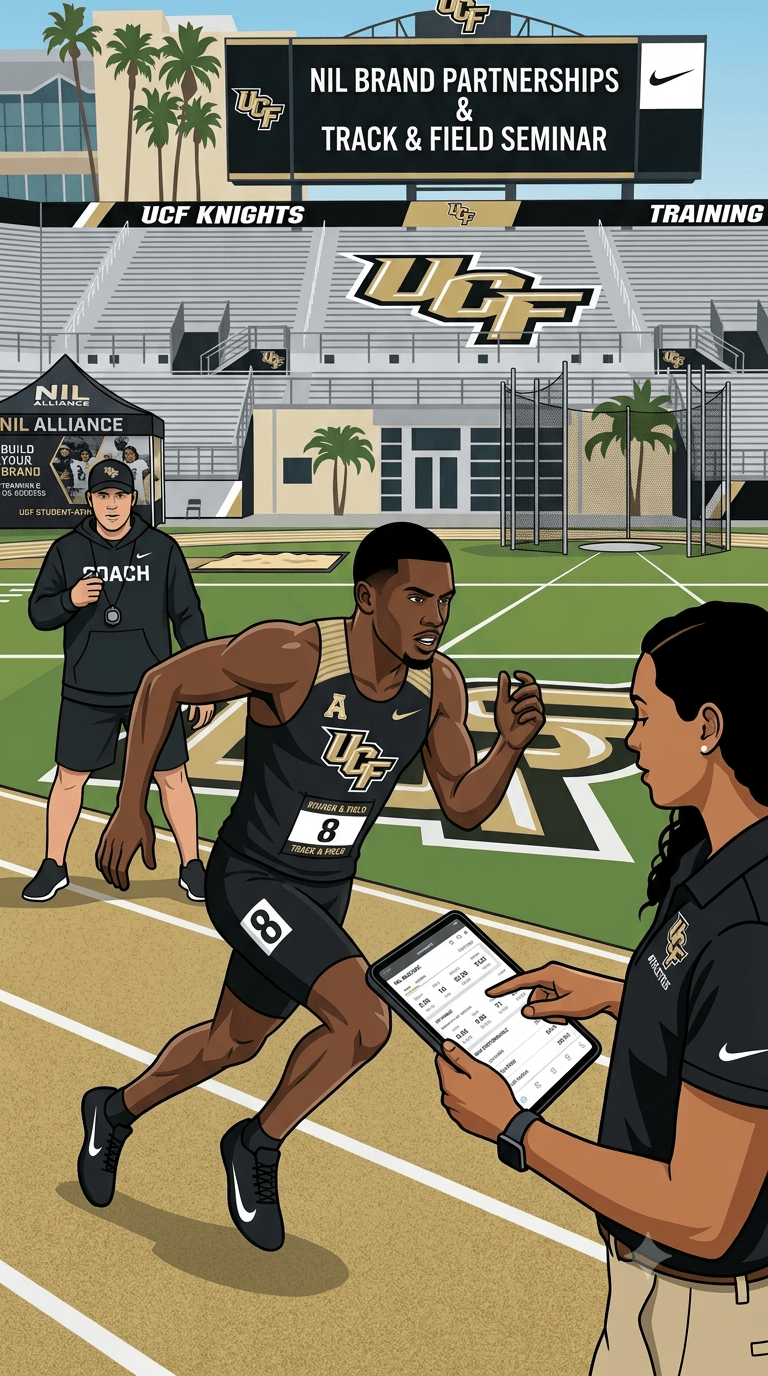
That binary choice has changed dramatically post 2020 with the initiation of NIL (Name, Image and Likeness) which created a vastly superior development model for young Olympic level athletes coming out of high school. It’s no longer an “either/or” choice, now it’s, which school do I think is the best fit. With NIL you can be highly compensated AND choose your training ecosystem. Throw in the flexibility of the Transfer Portal, and you can even pivot to a new ecosystem without facing a competitive penalty.
Today, if you are that level of athlete, capable of making an Olympic or World Championship squad, a top college program (SEC, BIG 10, Big 12, ACC) becomes a fully funded high performance training center, and built in training incubator, while you get paid! Following are four reasons why this level of athlete should choose college vs immediate professional contract.
1. Financial Parity via NIL without Corporate Extraction.
With modern NIL frameworks, elite high school athletes running Olympic-level times can command six-figure collective valuations and corporate brand partnerships that rival or exceed standard entry-level professional shoe contracts. Crucially, collegiate NIL money is largely decoupled from strict, punitive performance-reduction clauses common in rookie professional contracts (e.g., losing 20-50% of base pay for failing to rank top-10 in the world or missing a season due to minor injury).
2. The Institutional Support Ecosystem.
An elite NCAA program offers a localized, comprehensive support apparatus that would cost hundreds of thousands of dollars out-of-pocket as an independent professional. This includes world-class track surfaces dedicated biomechanical analysis labs, full-time sports medicine physicians, physical therapists, chiropractors, soft-tissue specialists, and nutritionists that are readily available to the collegiate athlete.
3. Structured and Monitored Competition.
A critical hazard for young professionals is the “circuit grind”, the need to chase fast times and world ranking points across continents, managing jet lag, variable track conditions, and irregular training blocks. The NCAA framework provides a highly structured, planned peaking cycle (Indoor Conference/NCAA, Outdoor Relay season, Conference, Regionals, NCAA Finals) that acts as a springboard for late-summer USATF Championships or international trials.
4. Unfettered Path to Global Championships.
Competing in the NCAA does not restrict an athlete from global championship exposure. WA (World Athletics) and USATF rules allow collegiate a thletes to maintain their eligibility while competing in national trials, the Olympic Games, and World Championships. The collegiate system shields the athlete from the pressure of competing for survival money on the European circuit, allowing them to focus entirely on tactical execution at major international championships.
The Bottom Line :
I understand that the idea of going pro right out of high school sounds exceptional. If we were talking about baseball, or basketball, it definitely would be. However we’re talking about track and field where professionalism is a concept, not a league. With the amount of money now flooding into colleges and universities, I personally see zero reason to take on the financial liabilities of “professionalism” over the ability to leverage the athletic developmental structure of a university AND get paid. For an athlete that can utilize NIL to secure financial independence, there is no other choice in my opinion.